Questions about privacy tend to surface wherever people gather in public spaces. Over the past few years, one topic in particular has shown up frequently in online searches: cameras in public restrooms. People want to know what’s legal, what’s not, and whether they should be concerned about surveillance in spaces meant to be private.
These questions are understandable. Public restrooms are shared spaces, but they are also places where privacy is expected. This blog aims to answer common concerns in a clear, factual way, without alarm, without speculation, and without assuming wrongdoing. We’ll walk through what the law generally allows, what it prohibits, and how privacy is typically protected in public and temporary restroom settings, including portable restrooms for sporting events.
Understanding Privacy Expectations in Public Restrooms
Although public restrooms are located in shared spaces, they are legally and socially treated as private environments. Privacy laws in many regions recognize that individuals have a reasonable expectation of privacy when using restroom facilities.
This expectation forms the basis for how surveillance laws are applied. While cameras may be present throughout public venues for security purposes, restroom interiors are treated differently from lobbies, hallways, or outdoor areas.
This distinction is essential for understanding why the placement of a camera in a public restroom is regulated far more strictly than cameras elsewhere in a public facility.
Federal Privacy Law on Recording in Private Spaces
According to U.S. federal law, recording individuals in areas where they have a reasonable expectation of privacy can be a criminal offense. 18 U.S. Code § 1801, part of the federal Video Voyeurism Prevention Act, makes it unlawful to intentionally capture an image of a person’s private area without consent when that person is in a context where they reasonably expect privacy. The statute defines “reasonable expectation of privacy” to include situations in which a person would expect not to be photographed or recorded, such as in changing areas, restrooms, or other private spaces where a person may disrobe. Under this law, knowingly capturing such an image without consent can result in fines and imprisonment.
Are There Cameras in Public Restrooms?
A common question is: Are there cameras in public restrooms?
According to legal standards and regulatory guidance, cameras are not permitted inside restroom interiors in compliant facilities. While cameras may be visible near restroom entrances or in surrounding public areas, these devices are positioned outside private spaces. Security cameras are commonly installed:
- In hallways outside restroom entrances
- In shared areas of venues such as stadium concourses
- Near entry or exit points for general security
These placements are intended to monitor crowd movement and safety, not restroom activity. This often leads to confusion, as cameras near restrooms may be mistaken for cameras inside them.
Cameras in Public Restrooms and Legal Restrictions
When people search for cameras in public restrooms, they are often trying to understand whether any form of recording is legally acceptable.
According to privacy laws and regulatory bodies, cameras are not allowed inside restroom interiors, including stalls and wash areas. This position is reinforced by:
- Restroom stalls
- Sink and grooming areas
- Enclosed restroom interiors
Due to these protections, the answer to whether cameras are allowed in public restrooms is generally no, particularly when referring to interior spaces. Legal restrictions apply regardless of whether the restroom is located in:
- Government buildings
- Commercial properties
- Event venues
- Temporary structures
Compliance with these rules is a baseline requirement for facility operators.
Is It Illegal to Have Cameras in a Public Restroom?
Search queries such as ‘Is it illegal to have cameras in public restrooms’ are among the most direct and high-intent questions users ask. In most regions, installing cameras inside restroom interiors is considered illegal. These laws exist to prevent non-consensual observation or recording in private situations. Violations can result in serious legal consequences, which is why legitimate businesses and event organizers avoid any form of interior surveillance in restroom spaces.
Are There Any Security Cameras in Public Restrooms?
Another frequent query is whether there are any security cameras in public restrooms. Security cameras may exist near restroom locations, but they are typically limited to:
- Monitoring entrances and exits
- Observing shared public spaces
- Using visible, clearly disclosed surveillance
These cameras serve general security purposes and do not capture activity inside restroom interiors. This approach balances safety needs with privacy obligations.
Can I Place a Security Camera in a Public Restroom?
The question of “Can I place a security camera in a public restroom?” often arises in the context of facility management or vandalism prevention.
Legal guidance indicates that restroom interiors remain off-limits for surveillance. Instead, courts and regulators recommend alternative measures such as:
- Increased staff presence
- Routine inspections
- Physical design choices that discourage misuse
These measures allow facilities to maintain order without infringing on privacy laws.
Portable Restrooms for Sporting Events and Privacy Design
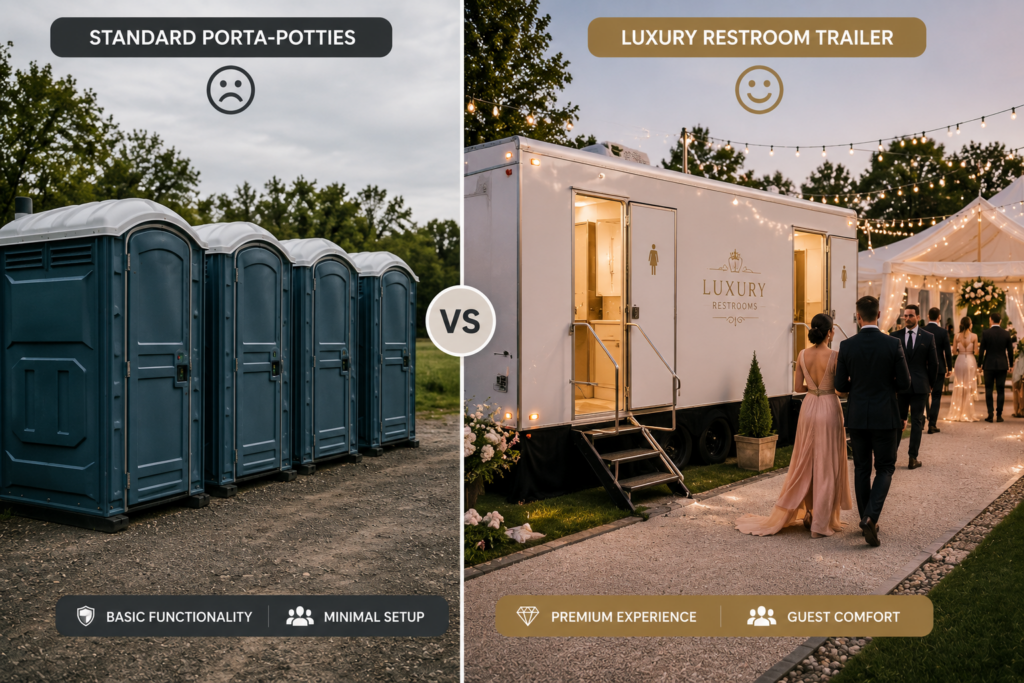
Large athletic events often rely on temporary restroom solutions. Portable restrooms for sporting events are designed as self-contained units that do not include internal surveillance systems.
Key privacy-related characteristics include:
- No built-in recording equipment
- No connection to permanent security networks
- Simple, purpose-specific design
Because these units operate independently from venue infrastructure, they naturally avoid concerns related to cameras or monitoring inside the restroom space. For event organizers, this simplicity supports both legal compliance and user confidence.
Why Privacy Standards Are Consistent Across Restroom Types
Whether a restroom is permanent or temporary, privacy expectations remain consistent. Laws do not distinguish between building-based facilities and portable units when it comes to interior surveillance.
This means:
- Recording inside restrooms is prohibited across formats
- Design standards emphasize enclosure and separation
- Operational policies reinforce non-surveillance
These standards help ensure that restroom users experience the same level of privacy regardless of location.
What Users Can Expect from Compliant Facilities
In properly managed environments, restroom users can expect:
- Cameras, if present, are to be clearly visible and outside restroom interiors
- Signage indicating monitored areas where applicable
- Restroom spaces free from recording devices
If questions arise, venue staff or event coordinators are typically able to explain how privacy is maintained.
Why This Topic Matters
Understanding what is allowed and what is prohibited helps clarify misconceptions about cameras in public restrooms. Most concerns stem from uncertainty rather than real-world practices.
By outlining legal standards and common facility designs, users can better understand how privacy is protected and what safeguards are in place.
Conclusion
The presence of cameras in public spaces has led many people to ask valid questions about privacy, particularly in restroom environments. Laws across most regions are clear: restroom interiors are private spaces where recording is not permitted. Concerns related to hidden cameras in public restrooms reflect legal prohibitions rather than common or accepted practices. Professional venues, event organizers, and restroom providers operate within strict privacy guidelines.
In settings such as portable restrooms for sporting events, the absence of internal surveillance infrastructure further reinforces privacy expectations. These facilities are designed for function, hygiene, and discretion. Ultimately, understanding what is legally allowed helps users feel informed and confident when using public and temporary restroom facilities.
Disclaimer: This article is provided for informational purposes only and does not constitute legal advice. Privacy and surveillance laws may vary by jurisdiction. Readers should consult local regulations or seek guidance from qualified legal professionals for specific legal questions or compliance requirements.