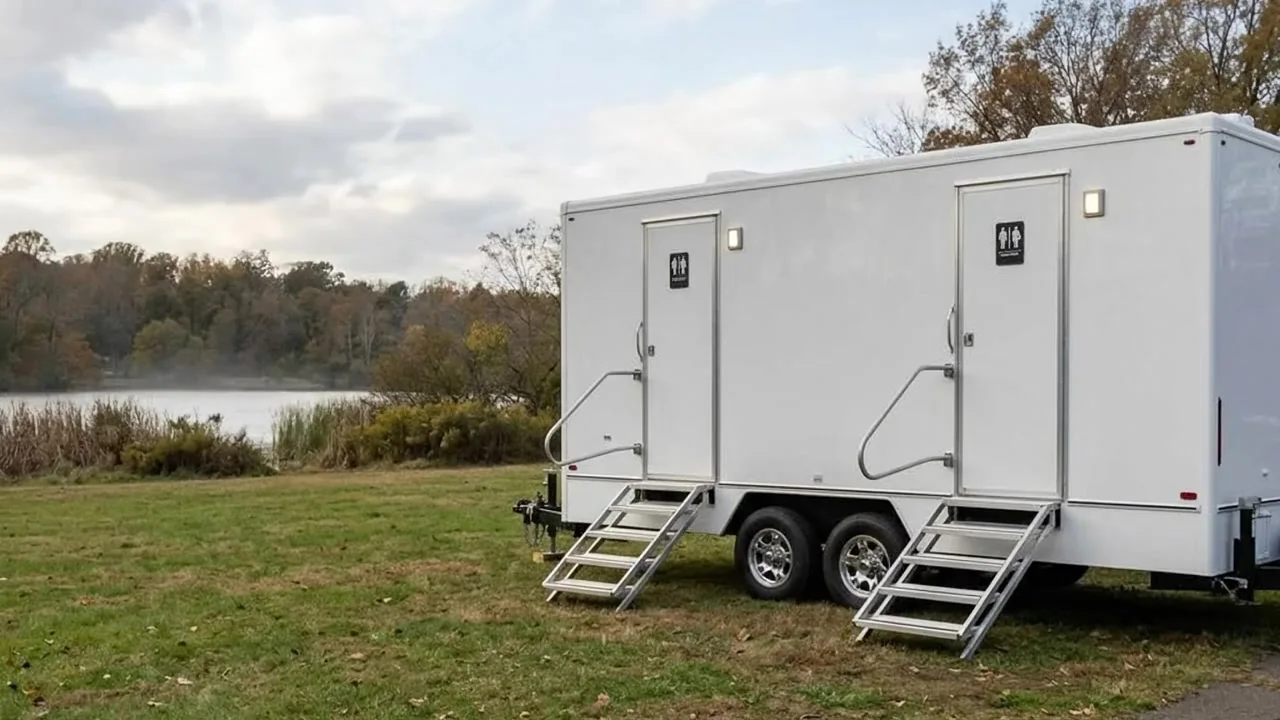
Restroom trailer rentals · New Jersey
Wind, snow, rain, or summer heat—one regional team keeps delivery, setup, and guest comfort clearly coordinated.
Four seasons.
One clear plan.
New Jersey basedServing NJ · NY · PA · DE
Built for the way you work.
THE COLLECTION · RESTROOM & SHOWER TRAILERS
Thoughtful restroom and shower trailer options for celebrations, jobsites, public projects, and everything in between.
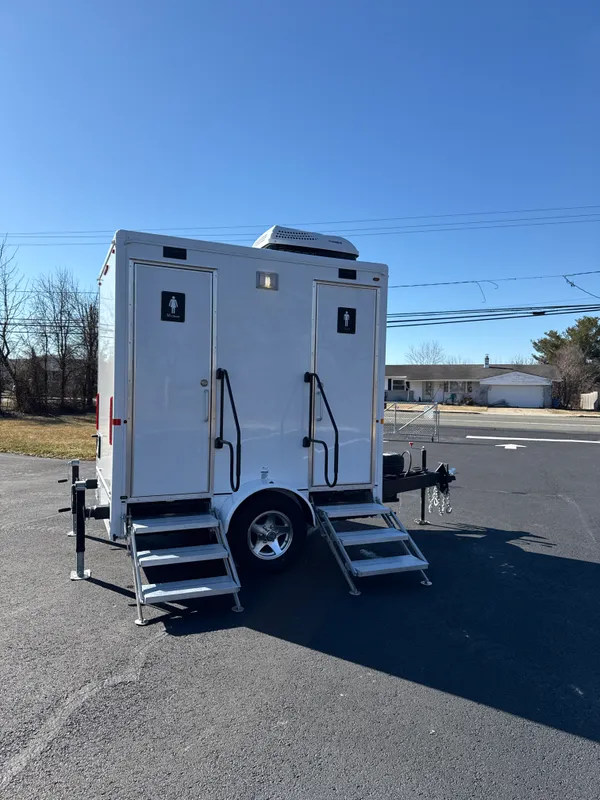
Restroom Trailer
Luxury Restroom Trailer (2 Stalls)
Give guests the comfort of an indoor restroom in a compact trailer that fits smaller event spaces. The 2-Stall Luxury Restroom Trailer includes private stalls, flushing toilets, running water sinks, climate control, lighting, and upscale finishes — making it a strong choice for backyard weddings, private parties, VIP areas, and venues where space is limited but guest experience still matters.
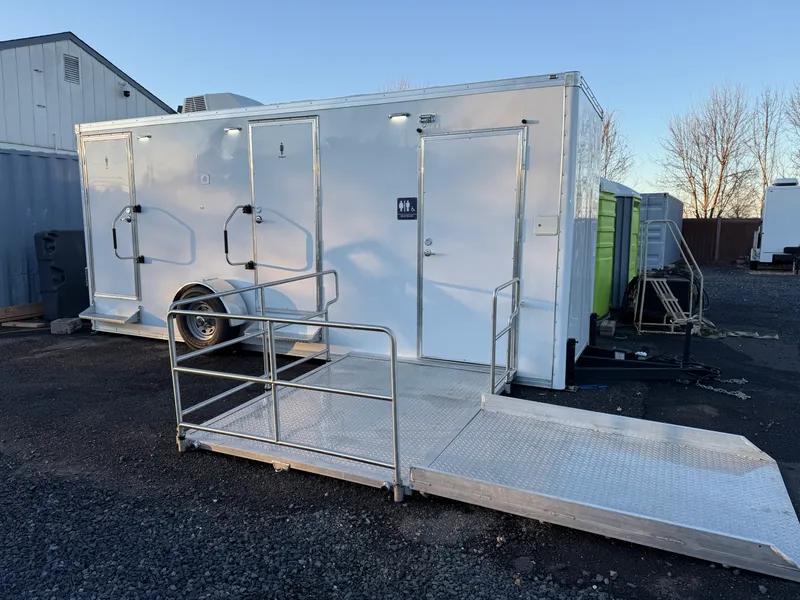
Restroom Trailer
Luxury Restroom Trailer (3 Stalls) ADA-Compliant
Make your event or jobsite accessible without sacrificing comfort. The 3-Stall ADA-Compliant Restroom Trailer includes a wheelchair-accessible ramp, spacious interior, safety handrails, climate control, and premium finishes — giving guests, workers, and visitors a dignified restroom experience with the accessibility your site requires.
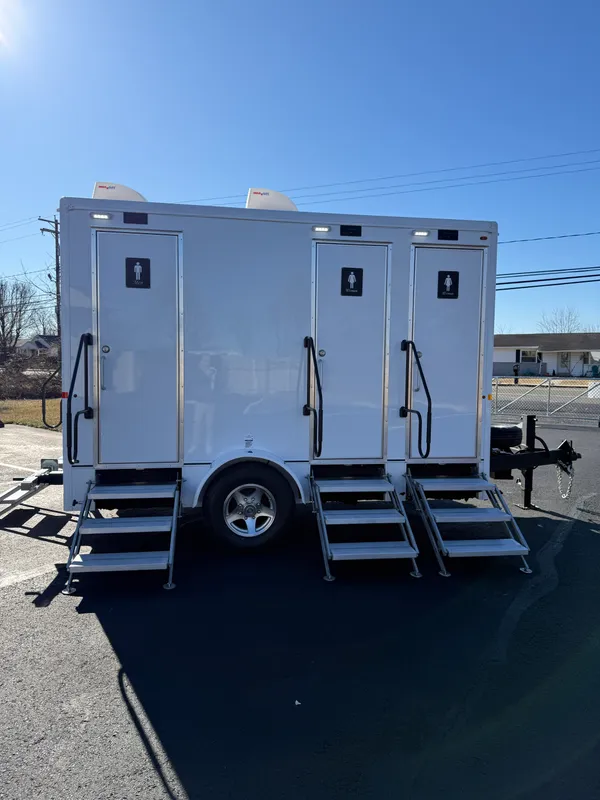
Restroom Trailer
Luxury Restroom Trailer (4 Stalls)
Give guests a smooth, comfortable restroom experience with separate men’s and women’s facilities in one luxury trailer. The 4-Stall Restroom Trailer includes private stalls, flushing toilets, running water sinks, climate control, lighting, and premium finishes — making it a strong fit for weddings, corporate events, festivals, outdoor concerts, and larger private gatherings.
Restroom Trailer
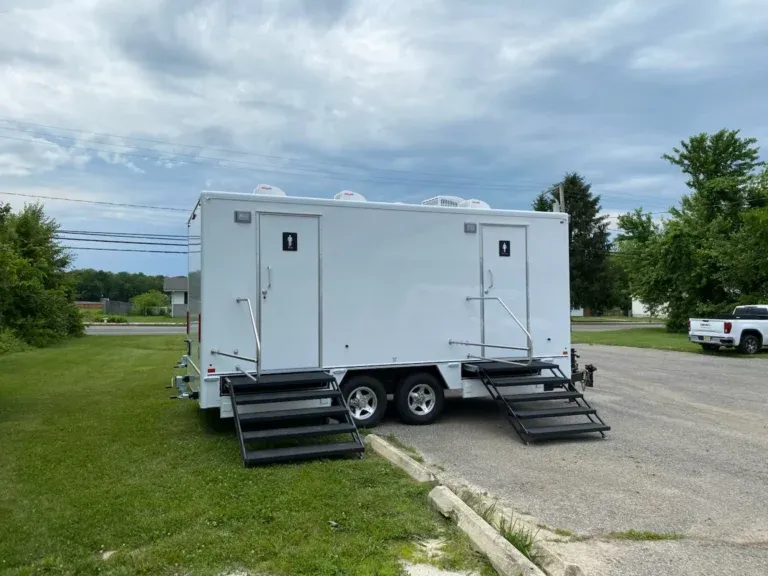
Restroom Trailer (8-Station)
Handle large guest counts without long restroom lines. The 8-Station Luxury Restroom Trailer gives guests separate men’s and women’s facilities, private stalls, urinals, running water sinks, touch-free fixtures, climate control, ventilation, lighting, and premium finishes — making it a strong choice for large weddings, festivals, corporate events, concerts, and high-attendance outdoor gatherings.
Restroom Trailer
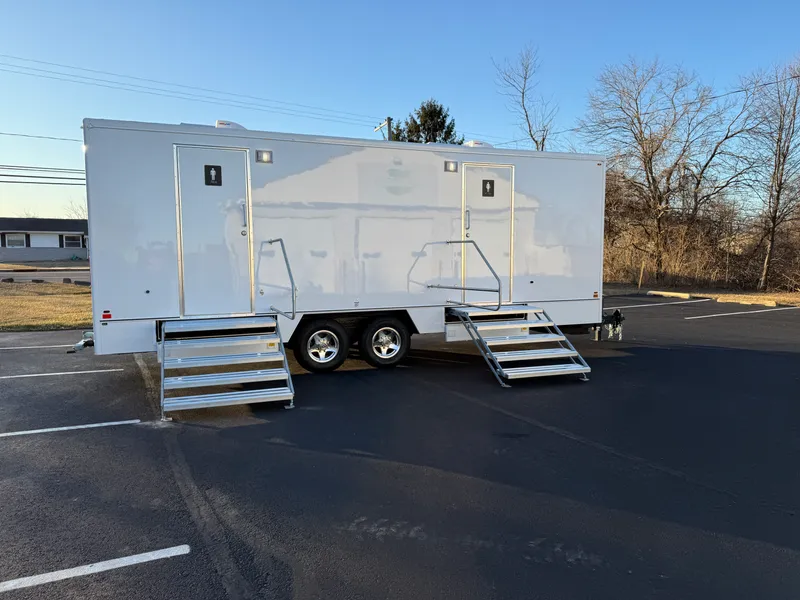
Luxury Restroom Trailer (10-Station)
Handle your largest events with a luxury restroom trailer built for high guest counts and smooth traffic flow. The 10-Station Luxury Restroom Trailer includes separate men’s and women’s facilities, 7 private stalls, 3 urinals, dual sinks, hot running water, climate control, lighting, and premium finishes — giving guests a comfortable restroom experience while helping reduce long lines at peak times. Built for high-capacity events with 500–800+ guests.
Shower Trailer
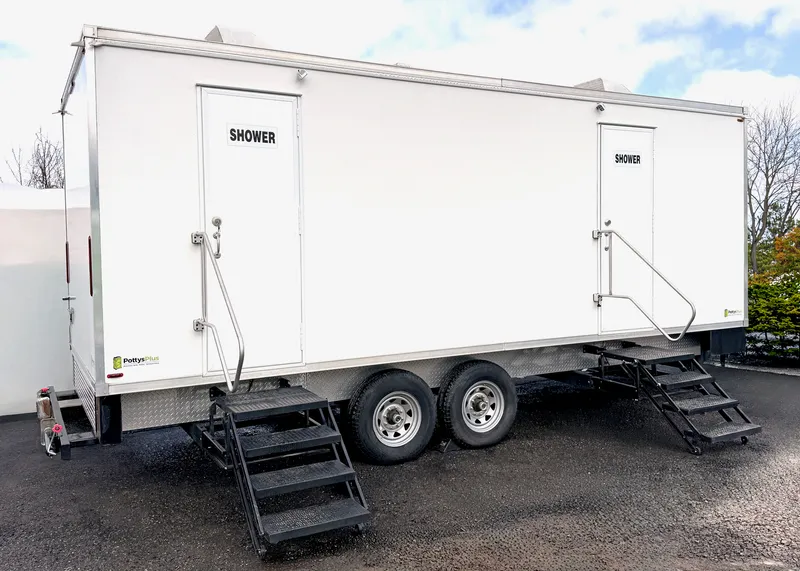
Portable Shower Trailer (6 Stalls)
A six-stall portable shower trailer for medium-capacity temporary shower needs. It is designed for construction crews of 40–60 workers, summer camps, athletic events, worker housing, emergency relief shelters, and outdoor festivals. The unit typically serves 50–75 people per day and can be configured as one single-gender section or separate men's/women's sections with three stalls per side.
Shower Trailer
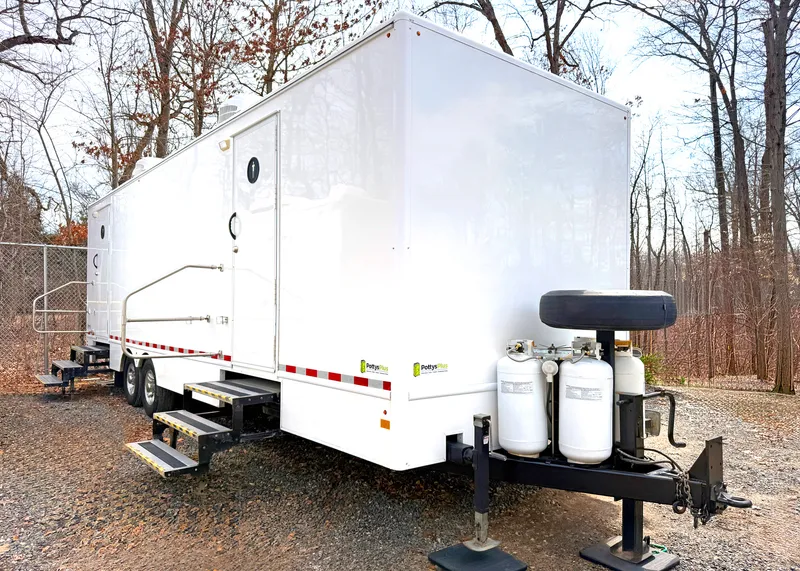
Portable Shower Trailer (8 Stalls)
An eight-stall, high-capacity portable shower trailer for large construction sites, major emergency-relief operations, large summer camps, multi-crew operations, and large worker-housing sites. It serves 75–100 people per day and is intended for crews of 60–80+ workers. It can be configured with separate men's/women's sections of four stalls per side.
Plan Restrooms for
Your Event or Job Site
Estimate trailers for a private event or check construction-site fixture minimums, then explore pricing for your rental.
Peak headcount at one time, not the total across shifts. No duration multiplier.
Enter a whole-number worker count of at least 1 (up to 9,007,199,254,740,991).
OSHA fixture minimums · Table D-1
Up to 20 workers; no separate urinal minimum.
Fixture minimums only—not full-site compliance certification. Toilet seats and urinals are not interchangeable.
Explore Trailer Pricing ↗How this is calculated
- Up to 20 workers1 toilet facility
- 21–1991 toilet seat and 1 urinal per 40 workers
- 200 or more1 toilet seat and 1 urinal per 50 workers
Partial fixture counts round upward. The 200-or-more row applies starting at exactly 200 workers.
Why 20 uses the smallest tier: the table says both “20 or less” and “20 or more.” OSHA’s May 17, 2006 interpretation explicitly states that 20 employees require at least one toilet; this calculator follows that guidance.
Fixture-count guidance only, not certification of full site compliance. Trailer suitability depends on actual toilet-seat and urinal configurations, prompt access, sanitary maintenance, washing facilities, and other applicable sanitation, state/local, and accessibility requirements. Toilets and urinals are not automatically interchangeable.
Find Luxury Restroom
Trailers Near You
Explore 62 service areas across four states.
New Jersey · Atlantic County
-
Atlantic City, New JerseyVerified service area Atlantic County 732.592.1717Mon–Fri 7:30 AM–5 PM
· Sat 8 AM–2 PM · Sun Closed View Location ↗
New Jersey · Bergen County
-
East Rutherford, New JerseyVerified service area Bergen County 732.592.1717Mon–Fri 7:30 AM–5 PM
· Sat 8 AM–2 PM · Sun Closed View Location ↗ -
Paramus, New JerseyVerified service area Bergen County 732.592.1717Mon–Fri 7:30 AM–5 PM
· Sat 8 AM–2 PM · Sun Closed View Location ↗ -
Fort Lee, New JerseyVerified service area Bergen County 732.592.1717Mon–Fri 7:30 AM–5 PM
· Sat 8 AM–2 PM · Sun Closed View Location ↗
New Jersey · Burlington County
-
Mount Laurel, New JerseyVerified service area Burlington County 732.592.1717Mon–Fri 7:30 AM–5 PM
· Sat 8 AM–2 PM · Sun Closed View Location ↗ -
Moorestown, New JerseyVerified service area Burlington County 732.592.1717Mon–Fri 7:30 AM–5 PM
· Sat 8 AM–2 PM · Sun Closed View Location ↗ -
Marlton, New JerseyVerified service area Burlington County 732.592.1717Mon–Fri 7:30 AM–5 PM
· Sat 8 AM–2 PM · Sun Closed View Location ↗
New Jersey · Camden County
-
Cherry Hill, New JerseyVerified service area Camden County 732.592.1717Mon–Fri 7:30 AM–5 PM
· Sat 8 AM–2 PM · Sun Closed View Location ↗
New Jersey · Cape May County
-
Cape May, New JerseyVerified service area Cape May County 732.592.1717Mon–Fri 7:30 AM–5 PM
· Sat 8 AM–2 PM · Sun Closed View Location ↗ -
Avalon & Stone Harbor, New JerseyVerified service area Cape May County 732.592.1717Mon–Fri 7:30 AM–5 PM
· Sat 8 AM–2 PM · Sun Closed View Location ↗ -
Ocean City, New JerseyVerified service area Cape May County 732.592.1717Mon–Fri 7:30 AM–5 PM
· Sat 8 AM–2 PM · Sun Closed View Location ↗ -
Wildwood, New JerseyVerified service area Cape May County 732.592.1717Mon–Fri 7:30 AM–5 PM
· Sat 8 AM–2 PM · Sun Closed View Location ↗
New Jersey · Essex County
-
Newark, New JerseyVerified service area Essex County 732.592.1717Mon–Fri 7:30 AM–5 PM
· Sat 8 AM–2 PM · Sun Closed View Location ↗ -
Montclair, New JerseyVerified service area Essex County 732.592.1717Mon–Fri 7:30 AM–5 PM
· Sat 8 AM–2 PM · Sun Closed View Location ↗
New Jersey · Hudson County
-
Jersey City, New JerseyVerified service area Hudson County 732.592.1717Mon–Fri 7:30 AM–5 PM
· Sat 8 AM–2 PM · Sun Closed View Location ↗
New Jersey · Mercer County
-
Princeton, New JerseyVerified service area Mercer County 732.592.1717Mon–Fri 7:30 AM–5 PM
· Sat 8 AM–2 PM · Sun Closed View Location ↗ -
Hamilton, New JerseyVerified service area Mercer County 732.592.1717Mon–Fri 7:30 AM–5 PM
· Sat 8 AM–2 PM · Sun Closed View Location ↗ -
Trenton, New JerseyVerified service area Mercer County 732.592.1717Mon–Fri 7:30 AM–5 PM
· Sat 8 AM–2 PM · Sun Closed View Location ↗
New Jersey · Middlesex County
-
Edison, New JerseyVerified service area Middlesex County 732.592.1717Mon–Fri 7:30 AM–5 PM
· Sat 8 AM–2 PM · Sun Closed View Location ↗ -
New Brunswick, New JerseyVerified service area Middlesex County 732.592.1717Mon–Fri 7:30 AM–5 PM
· Sat 8 AM–2 PM · Sun Closed View Location ↗ -
Woodbridge, New JerseyVerified service area Middlesex County 732.592.1717Mon–Fri 7:30 AM–5 PM
· Sat 8 AM–2 PM · Sun Closed View Location ↗
New Jersey · Monmouth County
-
Asbury Park, New JerseyVerified service area Monmouth County 732.592.1717Mon–Fri 7:30 AM–5 PM
· Sat 8 AM–2 PM · Sun Closed View Location ↗ -
Long Branch, New JerseyVerified service area Monmouth County 732.592.1717Mon–Fri 7:30 AM–5 PM
· Sat 8 AM–2 PM · Sun Closed View Location ↗ -
Red Bank, New JerseyVerified service area Monmouth County 732.592.1717Mon–Fri 7:30 AM–5 PM
· Sat 8 AM–2 PM · Sun Closed View Location ↗ -
Freehold, New JerseyVerified service area Monmouth County 732.592.1717Mon–Fri 7:30 AM–5 PM
· Sat 8 AM–2 PM · Sun Closed View Location ↗ -
Wall, New JerseyVerified service area Monmouth County 732.592.1717Mon–Fri 7:30 AM–5 PM
· Sat 8 AM–2 PM · Sun Closed View Location ↗
New Jersey · Morris County
-
Morristown, New JerseyVerified service area Morris County 732.592.1717Mon–Fri 7:30 AM–5 PM
· Sat 8 AM–2 PM · Sun Closed View Location ↗ -
Parsippany, New JerseyVerified service area Morris County 732.592.1717Mon–Fri 7:30 AM–5 PM
· Sat 8 AM–2 PM · Sun Closed View Location ↗
New Jersey · Ocean County
-
Toms River, New JerseyVerified service area Ocean County 732.592.1717Mon–Fri 7:30 AM–5 PM
· Sat 8 AM–2 PM · Sun Closed View Location ↗ -
Long Beach Island, New JerseyVerified service area Ocean County 732.592.1717Mon–Fri 7:30 AM–5 PM
· Sat 8 AM–2 PM · Sun Closed View Location ↗ -
Point Pleasant, New JerseyVerified service area Ocean County 732.592.1717Mon–Fri 7:30 AM–5 PM
· Sat 8 AM–2 PM · Sun Closed View Location ↗
New Jersey · Somerset County
-
Bridgewater, New JerseyVerified service area Somerset County 732.592.1717Mon–Fri 7:30 AM–5 PM
· Sat 8 AM–2 PM · Sun Closed View Location ↗
New York · Nassau County
-
Garden City, New YorkVerified service area Nassau County 732.592.1717Mon–Fri 7:30 AM–5 PM
· Sat 8 AM–2 PM · Sun Closed View Location ↗
New York · New York, Kings, Queens, Bronx and Richmond counties
-
New York City, New YorkVerified service area New York, Kings, Queens, Bronx and Richmond counties 732.592.1717Mon–Fri 7:30 AM–5 PM
· Sat 8 AM–2 PM · Sun Closed View Location ↗
New York · Suffolk County
-
Huntington, New YorkVerified service area Suffolk County 732.592.1717Mon–Fri 7:30 AM–5 PM
· Sat 8 AM–2 PM · Sun Closed View Location ↗ -
Islip, New YorkVerified service area Suffolk County 732.592.1717Mon–Fri 7:30 AM–5 PM
· Sat 8 AM–2 PM · Sun Closed View Location ↗ -
Riverhead, New YorkVerified service area Suffolk County 732.592.1717Mon–Fri 7:30 AM–5 PM
· Sat 8 AM–2 PM · Sun Closed View Location ↗ -
Southampton, New YorkVerified service area Suffolk County 732.592.1717Mon–Fri 7:30 AM–5 PM
· Sat 8 AM–2 PM · Sun Closed View Location ↗
New York · Westchester County
-
Yonkers, New YorkVerified service area Westchester County 732.592.1717Mon–Fri 7:30 AM–5 PM
· Sat 8 AM–2 PM · Sun Closed View Location ↗ -
White Plains, New YorkVerified service area Westchester County 732.592.1717Mon–Fri 7:30 AM–5 PM
· Sat 8 AM–2 PM · Sun Closed View Location ↗ -
New Rochelle, New YorkVerified service area Westchester County 732.592.1717Mon–Fri 7:30 AM–5 PM
· Sat 8 AM–2 PM · Sun Closed View Location ↗ -
Tarrytown, New YorkVerified service area Westchester County 732.592.1717Mon–Fri 7:30 AM–5 PM
· Sat 8 AM–2 PM · Sun Closed View Location ↗
Pennsylvania · Berks County
-
Reading, PennsylvaniaVerified service area Berks County 732.592.1717Mon–Fri 7:30 AM–5 PM
· Sat 8 AM–2 PM · Sun Closed View Location ↗
Pennsylvania · Bucks County
-
Doylestown, PennsylvaniaVerified service area Bucks County 732.592.1717Mon–Fri 7:30 AM–5 PM
· Sat 8 AM–2 PM · Sun Closed View Location ↗ -
Newtown, PennsylvaniaVerified service area Bucks County 732.592.1717Mon–Fri 7:30 AM–5 PM
· Sat 8 AM–2 PM · Sun Closed View Location ↗
Pennsylvania · Chester County
-
West Chester, PennsylvaniaVerified service area Chester County 732.592.1717Mon–Fri 7:30 AM–5 PM
· Sat 8 AM–2 PM · Sun Closed View Location ↗
Pennsylvania · Lancaster County
-
Lancaster, PennsylvaniaVerified service area Lancaster County 732.592.1717Mon–Fri 7:30 AM–5 PM
· Sat 8 AM–2 PM · Sun Closed View Location ↗
Pennsylvania · Lehigh County
-
Allentown, PennsylvaniaVerified service area Lehigh County 732.592.1717Mon–Fri 7:30 AM–5 PM
· Sat 8 AM–2 PM · Sun Closed View Location ↗
Pennsylvania · Montgomery County
-
King of Prussia, PennsylvaniaVerified service area Montgomery County 732.592.1717Mon–Fri 7:30 AM–5 PM
· Sat 8 AM–2 PM · Sun Closed View Location ↗
Pennsylvania · Northampton and Lehigh counties
-
Bethlehem, PennsylvaniaVerified service area Northampton and Lehigh counties 732.592.1717Mon–Fri 7:30 AM–5 PM
· Sat 8 AM–2 PM · Sun Closed View Location ↗
Pennsylvania · Northampton County
-
Easton, PennsylvaniaVerified service area Northampton County 732.592.1717Mon–Fri 7:30 AM–5 PM
· Sat 8 AM–2 PM · Sun Closed View Location ↗
Pennsylvania · Philadelphia County
-
Philadelphia, PennsylvaniaVerified service area Philadelphia County 732.592.1717Mon–Fri 7:30 AM–5 PM
· Sat 8 AM–2 PM · Sun Closed View Location ↗
Delaware · Kent and Sussex counties
-
Milford, DelawareVerified service area Kent and Sussex counties 732.592.1717Mon–Fri 7:30 AM–5 PM
· Sat 8 AM–2 PM · Sun Closed View Location ↗
Delaware · Kent County
-
Dover, DelawareVerified service area Kent County 732.592.1717Mon–Fri 7:30 AM–5 PM
· Sat 8 AM–2 PM · Sun Closed View Location ↗
Delaware · New Castle County
-
Wilmington, DelawareVerified service area New Castle County 732.592.1717Mon–Fri 7:30 AM–5 PM
· Sat 8 AM–2 PM · Sun Closed View Location ↗ -
Newark, DelawareVerified service area New Castle County 732.592.1717Mon–Fri 7:30 AM–5 PM
· Sat 8 AM–2 PM · Sun Closed View Location ↗ -
Middletown, DelawareVerified service area New Castle County 732.592.1717Mon–Fri 7:30 AM–5 PM
· Sat 8 AM–2 PM · Sun Closed View Location ↗
Delaware · Sussex County
-
Georgetown, DelawareVerified service area Sussex County 732.592.1717Mon–Fri 7:30 AM–5 PM
· Sat 8 AM–2 PM · Sun Closed View Location ↗ -
Lewes, DelawareVerified service area Sussex County 732.592.1717Mon–Fri 7:30 AM–5 PM
· Sat 8 AM–2 PM · Sun Closed View Location ↗ -
Rehoboth Beach, DelawareVerified service area Sussex County 732.592.1717Mon–Fri 7:30 AM–5 PM
· Sat 8 AM–2 PM · Sun Closed View Location ↗ -
Dewey Beach, DelawareVerified service area Sussex County 732.592.1717Mon–Fri 7:30 AM–5 PM
· Sat 8 AM–2 PM · Sun Closed View Location ↗ -
Bethany Beach, DelawareVerified service area Sussex County 732.592.1717Mon–Fri 7:30 AM–5 PM
· Sat 8 AM–2 PM · Sun Closed View Location ↗