ADA-compliant restroom trailerAn accessible option for your event or site.

This photo could not load. Please try another photo.
Luxury Restroom Trailer (3 Stalls) ADA-Compliant
Get instant pricing online in under 2 minutes
Final rental pricing depends on date, delivery location, and selected details.
Make your event or jobsite accessible without sacrificing comfort. The 3-Stall ADA-Compliant Restroom Trailer includes a wheelchair-accessible ramp, spacious interior, safety handrails, climate control, and premium finishes — giving guests, workers, and visitors a dignified restroom experience with the accessibility your site requires.
A more confident rental
What’s included with this trailer
Explore the features designed around comfort, convenience, and everyday use. Our team can help you match this trailer to your event or project.
Wheelchair-accessible ramp entryA ramped entry for wheelchair access.
Spacious interior with room to maneuverRoom to move comfortably inside.
Safety handrailsSupport while moving through the trailer.
3 total restroom stallsCompare capacity with your guest count.
Climate control with AC and heatA more comfortable indoor environment.
Premium interior finishesA polished setting for guests and crews.
Best-fit occasions
Ways to use this trailer
Temporary Projects
Temporary restroom access while a property is being renovated or facilities are offline. Explore this rental program ↗
Special Events
Guest-ready restroom trailers for celebrations, festivals, and outdoor gatherings. Explore this rental program ↗
Construction Sites
Restroom trailers for active crews with site access and service planned together. Explore this rental program ↗
The experience
Comfort planned around your site
Make your event or jobsite accessible without sacrificing comfort. The 3-Stall ADA-Compliant Restroom Trailer includes a wheelchair-accessible ramp, spacious interior, safety handrails, climate control, and premium finishes — giving guests, workers, and visitors a dignified restroom experience with the accessibility your site requires.
This luxury restroom trailer is part of the experience at your event or work site. Compare its features and get instant online pricing, then talk through arrival timing, placement, and site requirements with our team before booking.
Specifications and site planning
Use these details to plan delivery, access, and utilities for your location. Our team can help you confirm trailer-specific requirements before you reserve.
| Pricing | depends on date & delivery location |
|---|---|
| Availability | Currently available |
| Brand | Restroom Resources |
| Station / stall count | 3 total restroom stalls |
| Power requirements | Confirm electrical needs before delivery. |
| Water & waste capacity | Discuss water supply and waste service. |
| Delivery clearance | Review delivery access with our team. |
| Placement surface | Confirm a suitable spot before delivery. |
Before delivery
Share your address and delivery route with our team so we can review access before arrival.
Talk through power, water, and waste service with our team so we can plan around your location.
Discuss the available space and surface at your site so we can help plan trailer placement.
Plan with confidence
Help choosing your trailer
Match the trailer to your rental plans
Start with your guest or crew count, rental dates, and site location. Then consider peak usage, accessibility needs, and delivery access. Our team can help you compare this trailer with other options and review placement and utilities, so you can choose a rental that fits your event or project.
Frequently asked questions
How do I get a final quote for the Luxury Restroom Trailer (3 Stalls) ADA-Compliant?
Use the booking link to see current pricing and availability for your rental dates. Your final quote reflects delivery location, rental timing, and selected details.
What should I confirm before reserving this luxury restroom trailer?
Share your rental dates, site address, delivery route, placement area, and available utilities with our team. We can review trailer-specific requirements with you before you reserve.
Can I compare trailer options before booking?
Yes. Review the related trailer options below, then contact Restroom Resources with your guest count, event format, dates, and venue details for help choosing the right unit.
Compare other trailers
Restroom Trailer
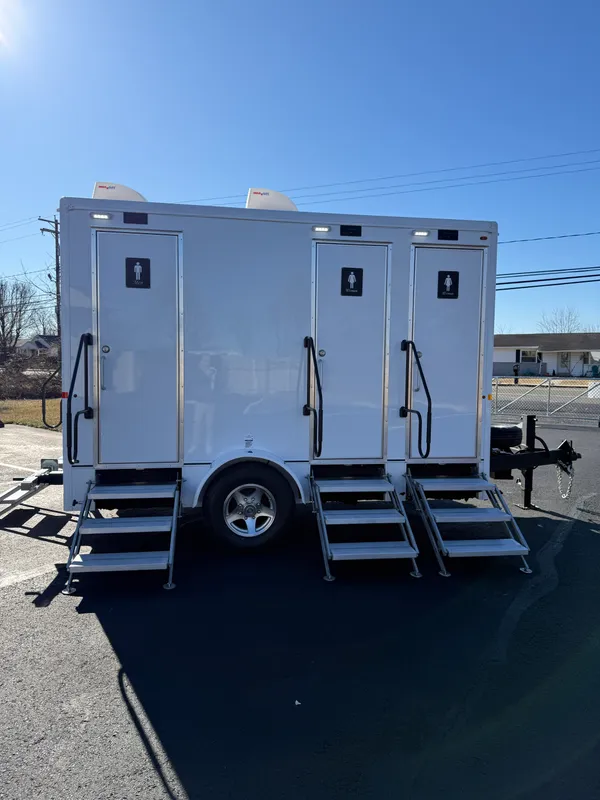
Luxury Restroom Trailer (4 Stalls)
Give guests a smooth, comfortable restroom experience with separate men’s and women’s facilities in one luxury trailer. The 4-Stall Restroom Trailer includes private stalls, flushing toilets, running water sinks, climate control, lighting, and premium finishes — making it a strong fit for weddings, corporate events, festivals, outdoor concerts, and larger private gatherings.
Restroom Trailer
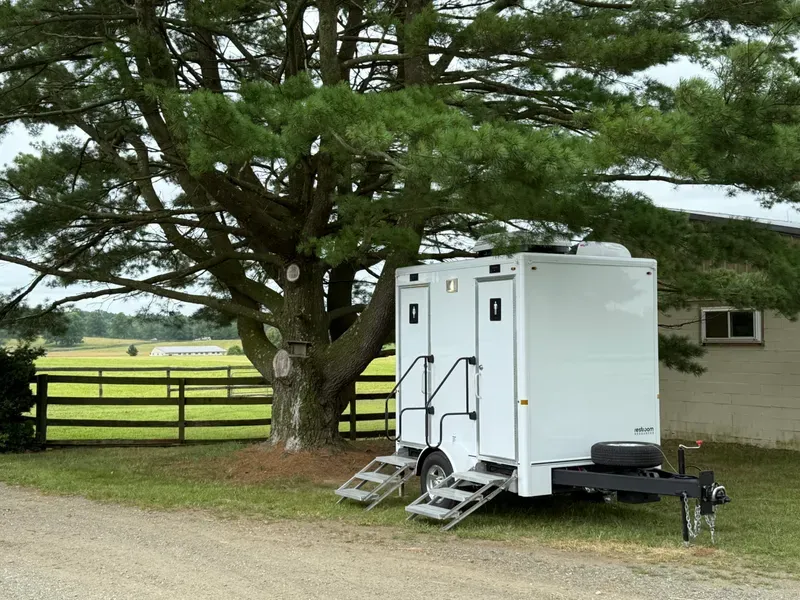
Luxury Restroom Trailer (2 Stalls)
Give guests the comfort of an indoor restroom in a compact trailer that fits smaller event spaces. The 2-Stall Luxury Restroom Trailer includes private stalls, flushing toilets, running water sinks, climate control, lighting, and upscale finishes — making it a strong choice for backyard weddings, private parties, VIP areas, and venues where space is limited but guest experience still matters.
Restroom Trailer
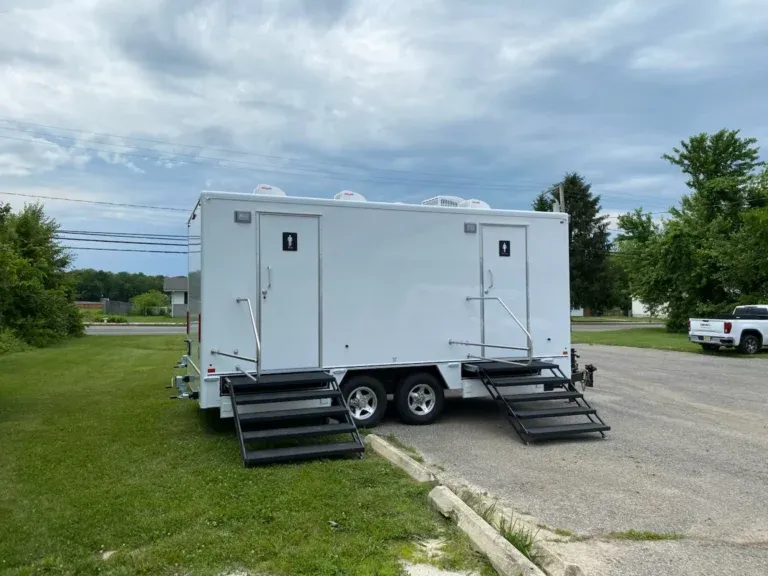
Restroom Trailer (8-Station)
Handle large guest counts without long restroom lines. The 8-Station Luxury Restroom Trailer gives guests separate men’s and women’s facilities, private stalls, urinals, running water sinks, touch-free fixtures, climate control, ventilation, lighting, and premium finishes — making it a strong choice for large weddings, festivals, corporate events, concerts, and high-attendance outdoor gatherings.